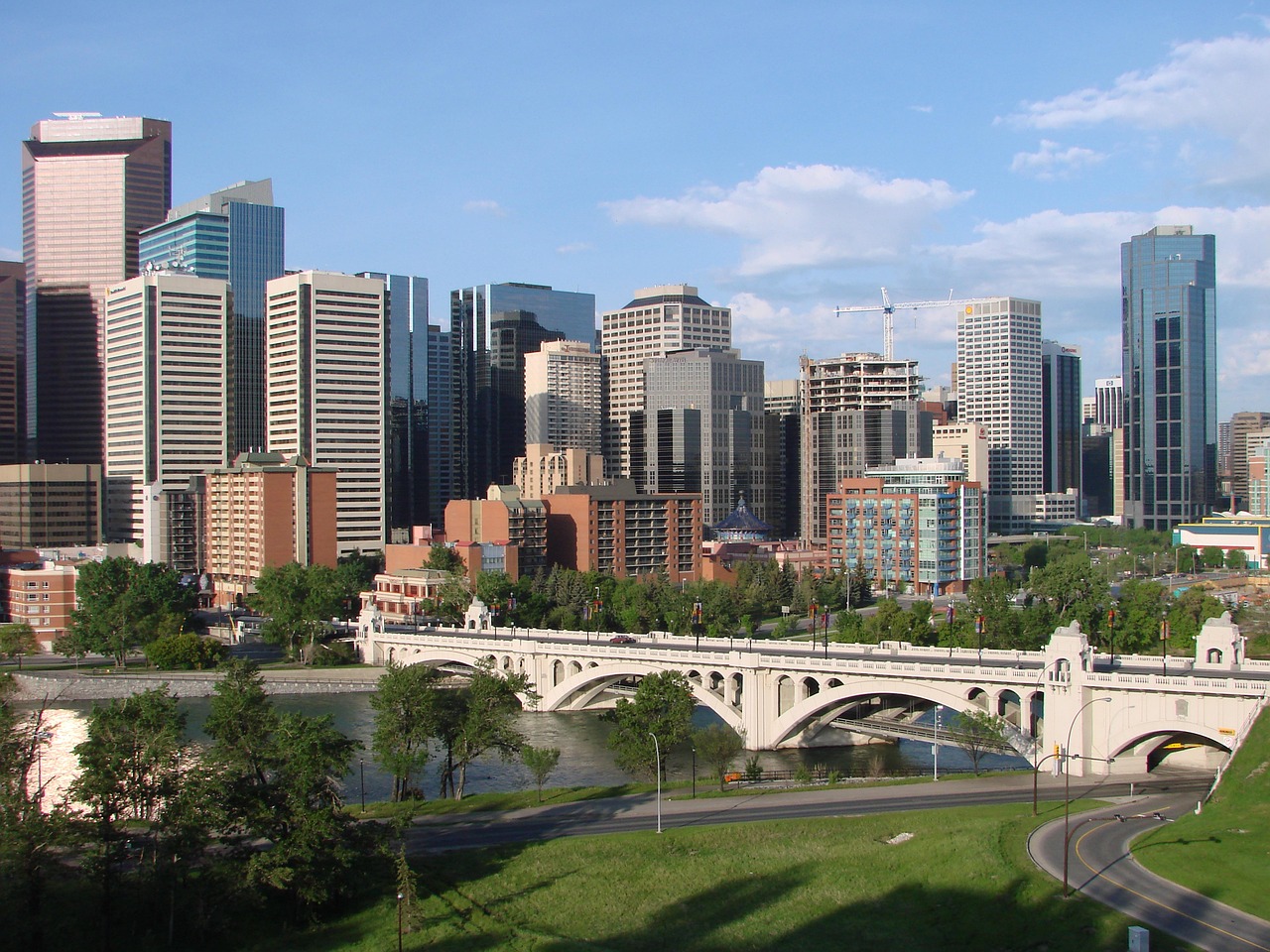
Is Alberta voting to leave Canada on October 19? That's the question I keep hearing, and it's the wrong place to start. On this week's episode of Real with Ritesh, "Alberta Referendum Explained: What All 10 Questions REALLY Mean," I sat down with Alexa Briggs, Executive Vice President of the Nonprofit Chamber, to go through every question on the ballot in plain English: what the wording says, what a vote could set in motion, and what is still unknown. This isn't a campaign interview, and it isn't a recommendation on how to vote. It's a guide to reading the ballot before you mark it.
- Albertans vote October 19, 2026 on 10 questions, and Elections Alberta says the results of questions 1 to 5 and 10 are ordered to be non-binding
- The Nonprofit Chamber's Before You Vote guide is blunt: no question changes anything by itself on October 20
- Question 10 is not an exit vote. Option 2 asks the government to begin the legal process toward a future binding referendum on separation
- Questions 6 to 9 are constitutional and need other provinces, and in the Senate's case all ten, so a yes starts a negotiation rather than ending one
- In 2021, 61.7% of voters said yes on equalization and nothing changed automatically, so read each question for what it sets in motion
What Is Alberta Actually Voting On on October 19?
Albertans will answer 10 questions on Referendum Day, October 19, 2026, per Elections Alberta. Questions 1 to 5 and question 10 are ordered to be non-binding. Questions 6 to 9 are constitutional questions about working with other willing provinces. Only the Orders in Council carry the exact ballot wording, so use the table below as a map, not a legal text.
| # | Topic | What It Asks, in Short |
|---|---|---|
| 1 | Immigration control | Should Alberta take more control of immigration, reduce it to more sustainable levels, favour economic migration, and give Albertans first priority for new jobs? |
| 2 | Provincial programs | Should eligibility for provincially funded health care, education, and social services be limited to citizens, permanent residents, and people with an Alberta-approved immigration status? |
| 3 | 12-month wait | Should non-permanent residents live in Alberta for at least 12 months before qualifying for provincial social support programs? |
| 4 | Fees | Should non-permanent residents pay a reasonable fee or premium to use health care and education? |
| 5 | Proof of citizenship | Should voters have to show proof of citizenship to vote in provincial elections? |
| 6 | Judges | Should provinces, not Ottawa, select judges for the provincial King's Bench and Court of Appeal, through a constitutional amendment? |
| 7 | Senate | Should the unelected Senate be abolished, through a constitutional amendment? |
| 8 | Opting out | Should provinces be able to opt out of federal programs in areas like health, education, and social services without losing the federal funding? |
| 9 | Law priority | Should provincial laws in provincial or shared jurisdiction take priority over conflicting federal laws? |
| 10 | Remain or begin separation process | Should Alberta remain a province of Canada, or should the government begin the legal process toward a binding separation referendum? |
Here's where each part of the conversation sits in the video, if you'd like to jump straight to it:
- 0:00 Unpacking the referendum questions
- 0:33 Immigration control and provincial autonomy
- 1:07 Access to public services for residents
- 1:29 Judicial appointments and constitutional change
- 1:57 The referendum on holding a referendum
- 2:34 The Before You Vote initiative
- 21:55 Proof of citizenship at the polls
- 33:28 Opting out of federal programs
Does a Yes on Question 10 Mean Alberta Is Leaving Canada?
No. Question 10 is the only one where voters choose between two options instead of yes or no. Option 1 is that Alberta should remain a province of Canada. Option 2 is that the Government of Alberta should begin the legal process under the Canadian Constitution to hold a binding provincial referendum on separation. Elections Alberta lists the result as non-binding (Elections Alberta, O.C. 160/2026).
That's why I opened the episode with it. Read slowly, Option 2 is a referendum on holding a referendum. It asks whether to start a process, not whether to finish one. Even a binding separation vote down the road would sit inside a constitutional process that involves Ottawa and other provinces, so the ballot on October 19 is a signal about direction, not a departure.

This is the gap Alexa kept coming back to: the difference between what a question says and what people assume it means. A headline can say "separation vote" while the ballot says "begin the legal process." Voting well starts with reading the second one.
What Do Questions 1 to 4 Mean for People Already Living in Alberta?
Questions 1 to 4 deal with immigration and public services, and they're all non-binding, so the government is free to act on the result or not (The Nonprofit Chamber, "Before You Vote: Referendum Reference Guide," 2026). They also share a feature that makes them easy to misread: each one asks about a direction, and the details are left open.
Question 1 packs several goals into one yes or no: more provincial control over immigration, lower levels, a preference for economic migration, and first priority for Albertans on new jobs. A person might agree with one of those and not the others. Question 2 asks about eligibility for provincially funded programs, and it uses the phrase "Alberta-approved immigration status," which the question itself doesn't define. Question 3 asks about a 12-month wait for non-permanent residents, and question 4 about a "reasonable fee or premium" for health care and education. Nobody can tell you from the ballot what that fee would be.
Here's why this matters beyond politics. As a licensed immigration consultant, I work with people who hold temporary status, so questions 2 to 4 aren't abstract for them. That's also why I wanted a neutral guest. Alexa's job in the episode wasn't to tell anyone how to vote on these. It was to separate what is proposed from what exists today, and public support from legal authority.
Immigration is also a shared federal and provincial area. Alberta can negotiate for more say, and a yes would signal that appetite, but a provincial ballot question can't rewrite federal immigration rules. For a broader look at how rules for newcomers are shifting, see what changes in Canada's Express Entry overhaul in 2026.
Question 5: Should Voters Have to Show Proof of Citizenship?
Question 5 asks whether Alberta should require proof of citizenship to vote in provincial elections (Elections Alberta, 2026). It's the question most people say they understand at first glance, and it's also the one that deserves the most patience, because the practical details decide the outcome for real voters.
The useful questions are the ones the ballot can't answer. Which documents would count? What would happen to voters who don't have easy access to them? How would that be administered at a polling place? Alexa and I spent a chapter on this one, starting at 21:55. If you're weighing it, treat the wording as the beginning of your homework, not the end.
Why Can't Questions 6 to 9 Change the Constitution on Their Own?
Questions 6 to 9 all begin the same way: a constitutional amendment, pursued with willing provinces. The Nonprofit Chamber's guide explains what that means in practice: the government must take the steps within its power to pursue the result with other provinces, but it can't force them to agree (The Nonprofit Chamber, 2026). A yes is an instruction to negotiate, not a law.
Question 6: judges
Today, the federal government appoints the judges of the provincial superior courts. Question 6 asks whether provinces should select judges for the Court of King's Bench and the Court of Appeal instead. The trade-offs are the ones you'd expect: more local say on one side, and on the other, questions about judicial independence and consistent standards across the country.
Question 7: the Senate
Question 7 asks about abolishing the Senate. In its 2014 Reference re Senate Reform, the Supreme Court of Canada held that abolition requires the unanimous-consent amending procedure, meaning Parliament plus all ten provinces, not the more common formula of seven provinces representing at least half the population (Reference re Senate Reform, 2014 SCC 32). A yes from Alberta would direct the province to advocate for it. It wouldn't deliver it.
Question 8: opting out of federal programs
Question 8 asks whether provinces could opt out of federal programs in areas such as health, education, and social services and keep the associated funding. This is the one we cover at 33:28. The unanswered parts are the interesting ones: how much funding, who decides, and what happens to national standards.
Question 9: whose law wins
Question 9 asks whether provincial laws in areas of provincial or shared jurisdiction should take priority over conflicting federal laws. The Chamber summarizes it as "Whose laws win in a provincial-federal conflict?" It's the most abstract of the four, and it only becomes concrete when you picture an actual conflict between two laws.
What Actually Happens After the Votes Are Counted?
On October 20, the guide says plainly, no question changes anything by itself (The Nonprofit Chamber, 2026). What you get is a political signal and, for some questions, a mandate to start negotiating. Everything after that still needs legislation, talks with Ottawa and other provinces, or constitutional change.
There's a recent precedent. In the 2021 referendum, 61.7% of voters said yes to removing the principle of equalization payments from the Constitution (Elections Alberta, "Referendum Results," 2021). A strong yes, and still the Constitution didn't change on its own. A referendum can show what voters want. It can't compel anyone else to agree.
My framing: treat each question as a three-part test. What does the wording say, what could the result realistically set in motion, and who else has to agree? If you can answer all three, you understand the question. If you can't, that's useful information about where to read more before you vote.
How Can You Prepare to Vote Without Taking Anyone's Word for It?
The Nonprofit Chamber built its Before You Vote reference guide to be plain-language and non-persuasive, covering what each question asks, what a result means, and where to read more. Start there, then confirm the official wording and logistics with Elections Alberta. The key dates, per Elections Alberta: advance polls run October 13 to 17 at select locations, mail-in ballots had to be returned to Elections Alberta in Edmonton by October 16, and Referendum Day is October 19.
A short checklist helps:
- Read the exact wording. Use the Orders in Council and Elections Alberta, not a headline.
- Note what's undefined. Terms like "Alberta-approved immigration status" and "reasonable fee" leave room for later decisions.
- Check who else has to agree. Ottawa, other provinces, or both.
- Make a plan to vote. Pick a day and a location. Turnout was about 39% last time.
Have Real Experience Worth Sharing?
If you're a builder, leader, thinker, or expert with practical lessons that can help people make better decisions, I'd like to hear from you. Apply to join a future conversation on the show.
Apply to Be a Guest →Want my read on cross-border moves for founders? Work with Ritesh →
Frequently Asked Questions
Is Alberta voting to leave Canada on October 19, 2026?
No. Question 10 asks voters to choose between two options: Alberta should remain a province of Canada, or the Government of Alberta should begin the legal process under the Canadian Constitution to hold a binding provincial referendum on separation. The result is non-binding and does not take Alberta out of Canada.
Which Alberta referendum questions are binding?
Per Elections Alberta, the results of questions 1 to 5 and question 10 are ordered to be non-binding. Questions 6 to 9 are constitutional questions: the government must take the steps within its power to pursue a yes result with other provinces, but it cannot force those provinces to agree.
Would a yes vote immediately change healthcare or education access for temporary residents?
No. Questions 2 to 4 are non-binding and describe possible future policy. The Nonprofit Chamber's guide states that no question changes anything by itself on October 20. Details such as which status counts as Alberta-approved, or how large a fee would be, are not set out in the questions.
Can Alberta abolish the Senate if question 7 passes?
Not on its own. In its 2014 Reference re Senate Reform, the Supreme Court of Canada held that abolishing the Senate requires the unanimous-consent amending procedure, meaning Parliament and all ten provinces. A yes vote would direct Alberta to pursue it with willing provinces, not deliver it.
When and where can I vote in the Alberta referendum?
Referendum Day is October 19, 2026. Advance polls run October 13 to 17 at select locations, and special mail-in ballots had to be returned to Elections Alberta in Edmonton by October 16. Check Elections Alberta for your location, the official ballot wording, and current details.
Ten questions can feel like a wall of noise. They get easier when you read each one for what it says, what it could start, and who else has to agree. Whatever you decide, decide it from the ballot, not the headline.
Watch the full conversation on Real with Ritesh on YouTube, read the Nonprofit Chamber's guide, connect with Alexa on LinkedIn, and get new frameworks early through the newsletter. If you have real experience and practical lessons that could help others make better decisions, apply to be a guest on Real with Ritesh.
This article is for educational and informational purposes only and does not constitute legal, financial, or immigration advice. It is not a recommendation on how to vote. Statements reflect information available at the time of writing, and proposed policies, legal interpretations, and implementation details may develop. Consult Elections Alberta for official ballot wording and current referendum information. Guest views are their own. References to third-party organizations do not imply endorsement, affiliation, or sponsorship.
Sources
- Elections Alberta, Referendum, retrieved 2026-10-13, 2026
- The Nonprofit Chamber, Before You Vote: Referendum Reference Guide, retrieved 2026-10-13, last updated August 28, 2026
- Elections Alberta, Referendum Results, retrieved 2026-10-13 (via search summary), 2021 referendum
- Wikipedia, 2021 Alberta referendum (turnout estimate of 38.71% of registered voters), retrieved 2026-10-13 (via search summary)
- Supreme Court of Canada, Reference re Senate Reform, 2014 SCC 32 (case summary), retrieved 2026-10-13 (via search summary), April 25, 2014
- Ritesh Watts and Alexa Briggs, Alberta Referendum Explained: What All 10 Questions REALLY Mean, Real with Ritesh, YouTube, October 12, 2026