
Getting noticed is one thing. Being trusted enough to earn funding, partnerships, and opportunity is another. On a recent episode of Real with Ritesh, "How to Build Credibility That Opens Doors to Funding," I sat down with Alex Gregory, who has spent more than 15 years across journalism, public relations, grants, partnerships, and community engagement. His work includes raising more than $3.6 million in grants and, more recently, supporting fundraising and investment at Triton AI Group. The question running through our conversation was a practical one: what makes you, and the work you're building, worth paying attention to, partnering with, and funding?
- Attention is short: the average time spent on a single screen fell from about 150 seconds in 2003 to 47 seconds by 2020 (Gloria Mark, UC Irvine), so your value has to land fast
- Credibility is built before the ask: media coverage, visible community presence, and client wins make funders and partners trust you
- Start with smaller grants and build a track record, then pursue larger funding as you prove you can lead, manage, and deliver
- Giving is concentrating: donors giving $100 or less fell 17% from 2020 to 2025, while under 0.5% of donors drove over 16% of donations (CanadaHelps, 2026)
- Use AI as an accelerator for proposals and operations, but keep a human responsible for judgment, accuracy, and relationships
You Get Seconds, Not Minutes
Think about the last time you skimmed a profile, a pitch deck, or a grant summary. How long did you give it before deciding whether to keep reading? Most of us decide quickly, and the people deciding about you do the same. We opened the episode on exactly that: how do you stand out when people give your content or professional profile only a few seconds?
The research backs the instinct. Gloria Mark, professor emerita of informatics at UC Irvine, has tracked attention on screens for more than 20 years. In 2003, people stayed on one screen for about 150 seconds on average before switching. By 2020, that average was 47 seconds (University of California, "How to sharpen your attention and meet your goals," January 2, 2024).
The takeaway isn't to chase shorter and shorter content. It's to get clear. If a stranger can't say what you do and why it matters after one pass, they won't reach the second one. In the episode, this is where Alex starts: communicate your value in seconds, then earn the right to say more.
If you'd rather jump to a specific topic, here's where each part of the conversation sits in the video:
Your Reputation Travels Before You Enter the Room
One line from the conversation stuck with everyone who has watched it: "Your reputation travels before you enter the room." By the time you meet a funder, a partner, or a hiring manager, they've usually formed a view from what they've read, what others said, and what you've shown publicly.
Alex's background in journalism gives him an unusual view of this. He covered organizations that went on to secure significant funding, and he sees visibility and reputation as part of why. Coverage doesn't win a grant by itself. What it does is signal that other people have already paid attention, checked, and found the work worth talking about.
But he's just as clear about the limit. Reputation alone isn't a substitute for showing up, meeting people, and building relationships. A strong profile opens the door. You still have to walk through it and be the person it promised.
That's also why positioning matters more than posting. Calling yourself an expert online isn't the same as being positioned as one. Positioning is the work of making it obvious what you're known for, who you help, and what evidence you have. Posting is only one way to carry that message.
Authority Comes From Other People's Wins
One of the sharpest ideas in the episode is that authority is cultivated by looking outward. Organizations that spend all their energy on self-promotion tend to sound alike. The ones that stand out highlight their clients' achievements and the real impact of the work. That client-centred story builds more trust with communities and funders than any self-description could.
Human stories carry this. A statistic tells a funder the problem is big. A person whose life changed because of your service tells them it's real, and that you're the one solving it. In a culture tired of noise but still responsive to authenticity, the specific, honest story beats the polished claim.
| Approach | Self-Promotion | Client-Centred Authority |
|---|---|---|
| Main story | "We're the best at this" | "Here's what changed for this person" |
| Proof | Claims and adjectives | Named outcomes and real examples |
| Who the hero is | The organization | The client or community |
| Effect on trust | Reads as marketing | Reads as evidence |
| What funders see | A pitch | A track record |
I'd add one practical test. Read your own website or last post and count how often the subject of a sentence is "we" versus the person you serve. If it's mostly "we," you're describing yourself, not proving yourself.
Win Small Before You Ask Big
Funders prefer progressive proof. Alex's view is that organizations should start with smaller grants, a few thousand dollars, deliver on them, and build toward tens of thousands and beyond. Each completed project shows you can lead, manage, and report honestly. That makes fundraising a continuing journey, not one big application.
The environment makes this more important, not less. Giving in Canada is concentrating. CanadaHelps' Giving Report 2026 found that online donations rose to $529 million in 2025, up 10%, yet donors giving $100 or less declined 17% from 2020 to 2025, and under 0.5% of donors, about 3,900 people, drove more than 16% of all donations (The Canadian Press via CP24, May 12, 2026).
Public grants are competitive too. The Ontario Arts Council reports receiving 11,706 grant applications in 2024-25 and awarding 2,999 grants worth $52.2 million (Ontario Arts Council, grant statistics, 2024-25). That's roughly one grant for every four applications, though the figures count grants and applications, not unique applicants, so treat the ratio as a rough guide.
In a crowded field, the application that stands out is the one backed by evidence: a delivered project, a named outcome, and people who will vouch for you. That evidence is what small grants buy you. If you want to see how an organization turns early credibility into momentum, the conversation with Ron Cunningham on youth pathways is a good companion to this one.
Partnerships Take Years, Not Posts
Alex is blunt that networking isn't a transaction. Meaningful partnerships can take years to develop and last decades. They come from consistent engagement, remembering people over time, and offering value before you need anything. The goal isn't a full contact list. It's a reliable ecosystem of people who know what you do and trust you to deliver.

Social media has a role, but he treats it as a first step. It helps people become familiar with you before you meet. It can't replace sitting across from someone. The data on trust explains why. Edelman's 2026 Trust Barometer found that 73% of Canadians are unwilling or hesitant to trust someone with different values, facts, or approaches, and that people are retreating into smaller, familiar circles (Edelman, 2026 Edelman Trust Barometer, Canada). Trust now has to be earned up close.
What if you're an introvert? We covered that. Alex describes the "PACE method" of low-impact event participation, combined with virtual engagement on platforms like LinkedIn, as a way to build familiarity gradually. You don't have to work a room. You can show up, contribute a little, follow up, and let recognition build over time.
This is also where the Amplify pillar and credibility meet. Visibility without relationships is just reach. Relationships without visibility stay small. The founders and organizations who do well tend to do both: they show up publicly, then deepen the connections privately. The same thread runs through Jennifer Lussier's view of Calgary's ecosystem, where intentional meetings beat volume networking.
Make Community Impact Part of the Operation
The community visibility framework in the episode comes down to this: be present in the community you serve, and be seen contributing. Alex notes that even modest efforts, like a community barbecue, can build the trust and recognition that funders notice. It's not about spectacle. It's about being a known, reliable presence.
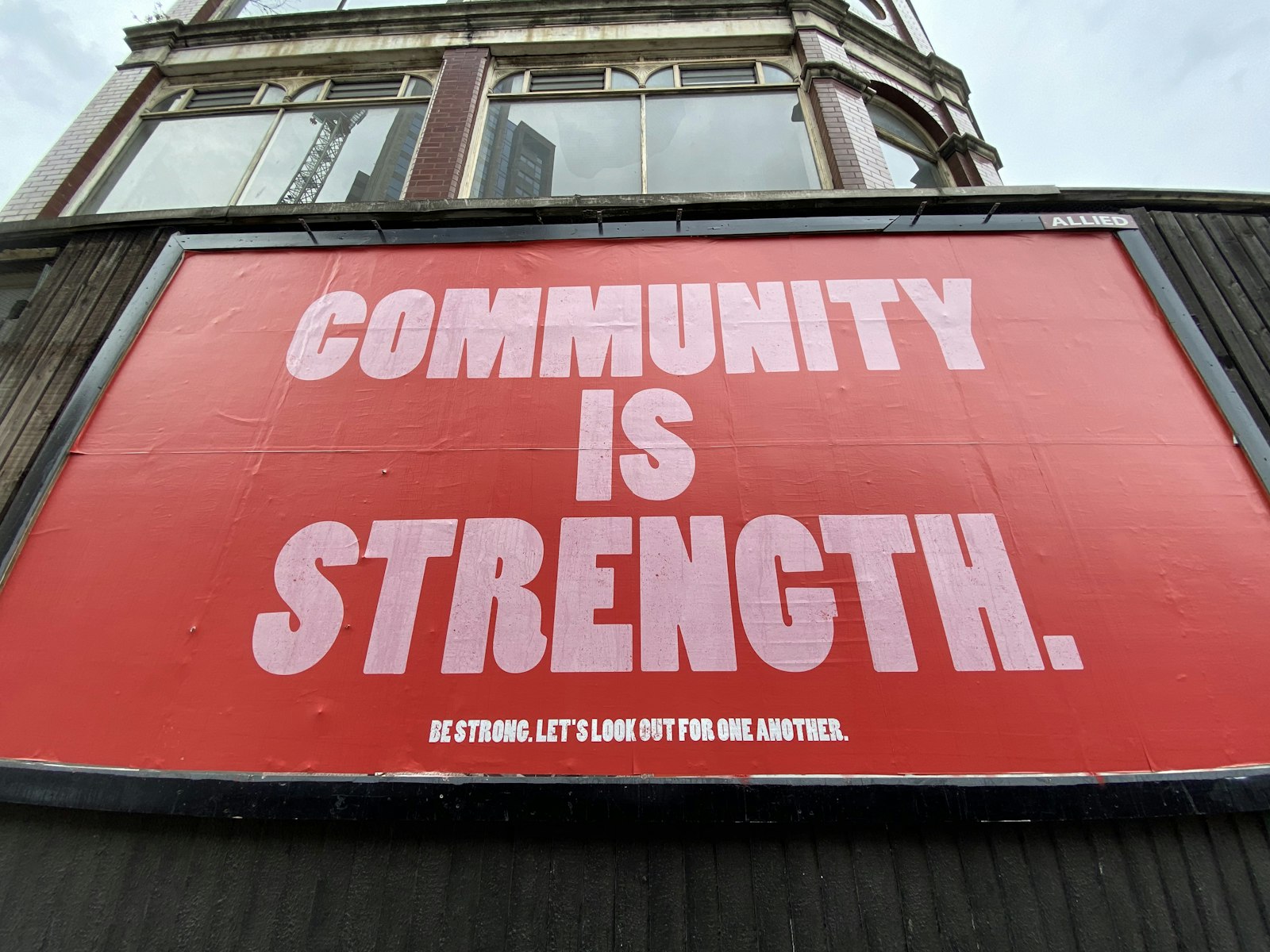
For-profit businesses can do this too. Alex points out that setting up a foundation tied to a for-profit company is expensive and legally complex. His advice is simpler: weave corporate social responsibility into how you operate from day one. Genuine contributions build community trust and lay the groundwork for future impact, long before any foundation is on the table.
He also warns about complacency. Organizations that lean on legacy funding streams without evolving risk becoming obsolete. With applications rising and money finite, funding bodies and organizations may increasingly merge and collaborate to reduce duplicated services. His advice is to diversify funding, update your mission when it needs updating, and build programs that are distinct.
If you're building a business and thinking about community impact, how you structure your leadership matters too. My piece on legacy as a system covers how to build something that outlasts any one person.
AI Is a Tool, Not the Relationship
We got into AI later in the conversation, with the chapter on the new frontier of agentic AI starting at 40:05. Alex sees AI as a real accelerator for fundraising: faster proposal drafting, quicker application screening, and lighter operational work. He's also clear that it makes mistakes and lacks judgment, so a human has to stay responsible.
That fits what's happening on the funder side. AI is starting to reshape how applications are screened, which means the quality, accuracy, and clarity of what you submit matters even more. Organizations that combine AI speed with human oversight will have an edge. Those that outsource their judgment will repeat each other's mistakes.
He also points to a bigger shift. Economic pressure, rising demand, and AI-driven changes in job requirements mean organizations and individuals need to keep reskilling. Some government funding exists for AI upskilling, but plenty of learning resources are free. The proactive attitude matters more than the budget.
Here's a simple way to apply the whole conversation:
- Write your value in one sentence. Test it on someone who doesn't know your work.
- Collect proof. Gather client outcomes, press mentions, and short stories with permission.
- Start with a smaller grant or partner. Deliver, report honestly, and keep the relationship warm.
- Show up in person. Pick one community event a month and follow up with everyone you meet.
- Use AI to draft, not decide. Review every claim, number, and name yourself.
Reputation, relationships, and delivery work together. None of them is optional, and none of them is fast.
Want to Build a Reputation People Can Trust?
I help founders and professionals position themselves clearly, build visible proof, and create the relationships that open doors. If you'd like to sharpen your story and your strategy, let's talk.
Book a Strategy Call →Frequently Asked Questions
How do you build credibility before asking for funding?
Show proof before you make the ask. Alex Gregory's advice is to be visible in your community, get your story told through media and real events, and start with smaller grants that demonstrate you can lead, manage, and deliver. Funders trust a track record more than a pitch.
Why should you start with smaller grants?
Smaller grants let you prove you can run a project and report on it honestly. Funders generally prefer to see that progression, from a few thousand dollars to tens of thousands, before trusting you with a larger sum. Each completed grant becomes evidence for the next application.
Can social media replace in-person networking?
No. Alex treats social media as a starting point, not a substitute. Platforms like LinkedIn help you become familiar before you meet, but trust is built face to face. Edelman's 2026 Trust Barometer found 73% of Canadians are unwilling or hesitant to trust people with different values or backgrounds (Edelman, 2026).
How should founders use AI in fundraising?
As an accelerator, not a replacement. AI can speed up proposal drafting, research, and operational tasks, but it makes errors and lacks judgment about people and context. Keep a human reviewing every application, claim, and number before it goes out under your name.
How long does it take to build a meaningful partnership?
Often years. In the conversation, Alex describes partnerships that take years to develop and can last for decades. They grow through consistent engagement, remembering people, and contributing value before you need anything. Treat networking as a long-term investment, not a transaction.
Alex Gregory's message is simple: attention gets you noticed, but trust gets you funded. Make your value clear in seconds, let other people's wins tell your story, prove yourself on small projects, and invest in relationships that last years. Then use AI to move faster without handing over your judgment.
Watch the full conversation on Real with Ritesh on YouTube, connect with Alex on LinkedIn, and get sharper systems and frameworks early through the newsletter. If you have real experience and practical lessons that could help others make better decisions, apply to be a guest on Real with Ritesh.
This article is for educational and informational purposes only and does not constitute financial, legal, or grant-application advice. Funding examples reflect experiences discussed in the episode, not guaranteed outcomes, and eligibility and funding decisions vary by program and applicant. Guest views are their own. Third-party names and data remain the property of their owners, and their mention does not imply endorsement, affiliation, or sponsorship.
Sources
- University of California, How to sharpen your attention and meet your goals (Gloria Mark), retrieved 2026-10-07, January 2, 2024
- The Canadian Press via CP24, Online donations in Canada soared in 2025, but there's 'a concerning trend' (CanadaHelps, The Giving Report 2026), retrieved 2026-10-07, May 12, 2026
- Ontario Arts Council, OAC Grant Statistics 2024-2025, retrieved 2026-10-07
- Edelman, 2026 Edelman Trust Barometer, Canada, retrieved 2026-10-07, 2026
- Real with Ritesh, How to Build Credibility That Opens Doors to Funding | Alex Gregory, YouTube, October 6, 2026