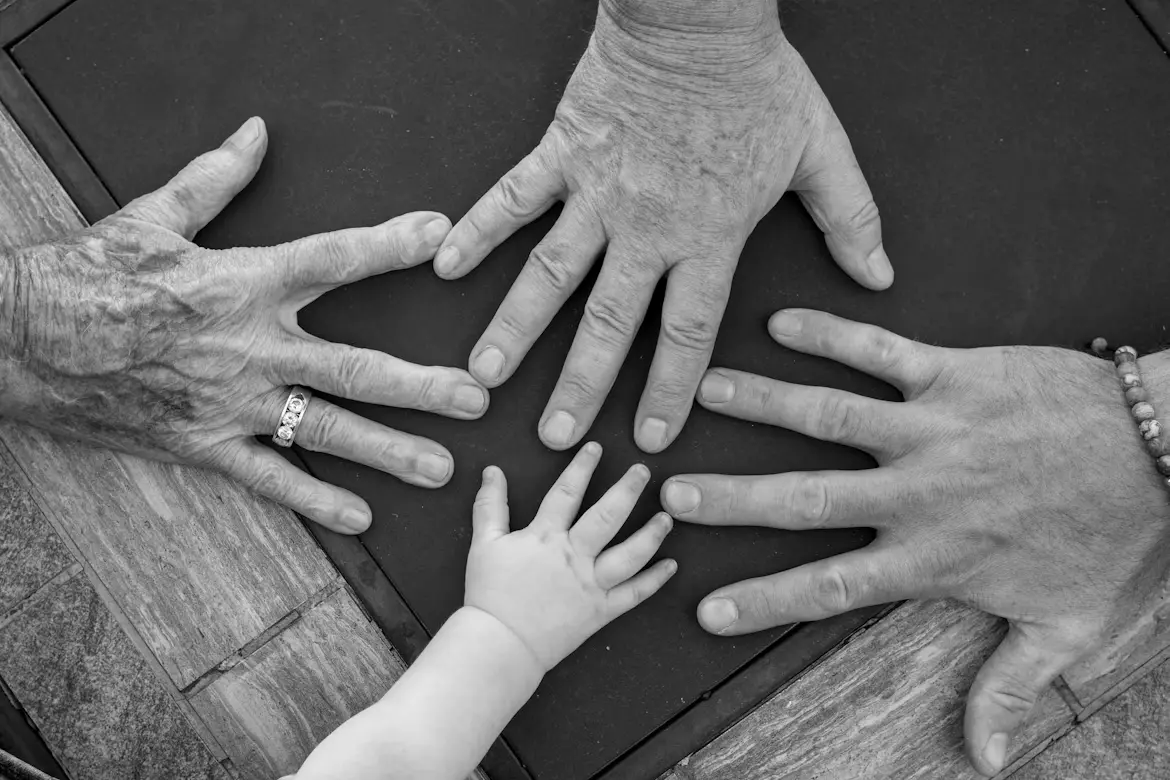
Most advice about "legacy" is really just estate planning with better branding - a will, a beneficiary form, a number on a spreadsheet. On a recent episode of Real with Ritesh, "Legacy, Parenting & Life Lessons: The Blueprint Behind the Watts Family," my own family sat down and talked about what actually gets passed down when a business and a name move from one generation to the next. It wasn't a tidy conversation, and it wasn't about money first. Here's what the data says about why so few founders build a real system for that handoff, and what one actually looks like.
- 40% of family businesses worldwide are mid-succession or will hand over leadership within 10 years, yet most treat it as a one-time event instead of an ongoing system (Deloitte Global, 2026)
- 85% of family business leaders call succession planning "critical," but only 57% have an actual plan and fewer than 24% are actively implementing one (Deloitte Private, February 2026)
- In Canada, 76% of small business owners plan to exit within a decade - over $2 trillion in assets - yet just 9% have a written succession plan (CFIB, 2023)
- 88% of Indian entrepreneurs trust their children to manage the family's wealth, but 45% don't actually expect them to run the business (HSBC Global Private Banking via Business Today, 2025)
- An estimated $124 trillion will move between generations in the US alone over the next 25 years - up 48% from a 2021 projection (Cerulli Associates, 2025)
The Most Misunderstood Word in Wealth-Building
In 2026, roughly 40% of family businesses worldwide are either mid-transition or expected to hand leadership to a new generation within the next 10 years (Deloitte Global, "Family Business Succession Planning and the Next Generation," 2026). Most founders hear "legacy" and picture a eulogy, or a lump sum in a will. Almost none picture a system built to survive without them making the decisions.
That distinction is what my family and I actually got into on that episode. We didn't talk about numbers first. We talked about how decisions get made when I'm not in the room - what my kids have watched me do often enough that they'd do it the same way, and what they'd need to be told outright because they've never had to figure it out themselves.

A legacy isn't the amount left behind - it's whether the people who inherit it can make good decisions without you in the room. Founders who treat succession as a single event, a will signed once and filed away, are building an inheritance. Founders who treat it as an ongoing system are building a legacy.
That's not a semantic point. It changes what you actually do this year, not just what a lawyer drafts eventually. It means documenting how you decide, not just what you own - and testing whether someone else can run the meeting before you need them to.
The Succession Paradox
In February 2026, Deloitte Private surveyed 300 family business executives and found a gap it called the "succession paradox": 78% expect a CEO transition within the next decade, and 85% call succession planning "critical" - but only 57% have an established plan, and fewer than 24% are actively implementing one (Deloitte Private, "Family Businesses Are Facing a Succession Paradox," February 2026).
The same gap shows up in Canada. In its flagship research, the Canadian Federation of Independent Business found 76% of small business owners plan to exit within the next decade, representing more than $2 trillion in business assets - yet just 9% have a written succession plan, 46% have none at all, and 54% say finding a suitable successor is the hardest part of leaving (CFIB, "Succession Tsunami: Preparing for a Decade of Small Business Transitions," 2023).
The paradox isn't ignorance. Founders know the exit is coming - 78% say so themselves. What's missing isn't awareness, it's the unglamorous, ongoing work: documenting decision rights, testing whether the next generation can run a meeting without you, and building a governance habit years before you need it.
The Trust Gap
In a 2025 survey of Indian entrepreneurs, HSBC Global Private Banking found 88% trust their children's ability to manage the family's wealth - but 45% don't actually expect them to take over the business, and only 7% of heirs say they feel obligated to join (Business Today, citing HSBC Global Private Banking, May 2025).
That's the trust gap: parents trust their kids with the money, but not always with the job - and most kids don't feel entitled to the job either way. Still, 79% of owners plan to pass the business to a family member regardless (Business Today, citing HSBC, May 2025). Trust and expectation are quietly running on separate tracks, and nobody's said so out loud.
Governance paperwork tells a related story. About 63% of Indian family business leaders report having a formal structure in place - a shareholder agreement, a family constitution, or at minimum a basic will - which means more than a third are relying on nothing but assumption and goodwill (Treelife, "Succession Planning in Indian Family Businesses," retrieved 2026-09-17).
Here's the part that surprised me from our own conversation: trust isn't the thing that's missing. What's missing is ever actually asking. Parents assume their kids know they're wanted in the business; kids assume their parents want them there out of duty, not desire. Both are usually wrong, and neither says so until the succession clock is already running.
The $124 Trillion Question
An estimated $124 trillion will move between generations in the United States alone over the 25 years from 2024 to 2048 - a figure Cerulli Associates revised upward 48% from its 2021 estimate of $84 trillion, largely because of asset appreciation and wealth concentration (Cerulli Associates, "Unpacking the Great Wealth Transfer," October 2025).

Not all of that reaches the next generation intact. Visa's Business and Economic Insights team estimates boomers hold roughly $93 trillion in gross assets, but after taxes, retirement spending, and charitable bequests, only about $36 trillion will actually pass to Gen X and millennial heirs over the next 20 years (Visa Business and Economic Insights, "The Great Wealth Transfer Reality Check," July 2026).
For founders, this matters more than it does for a salaried retiree. Most of that boomer wealth isn't sitting in a brokerage account waiting to be split evenly - a large share of it is locked inside an illiquid business, real estate held through a holding company, or equity nobody has priced recently. A system decides how that gets valued and transferred. A will just decides who technically owns it.
The Blueprint
Just 9% of Canadian small business owners have a formal, written succession plan (CFIB, 2023) - which means the other 91% are relying on hope, a handshake, or a lawyer they'll call "eventually." A blueprint fixes that by turning legacy into a system with four working parts, not a single document.
1. A governance document, not just a will
A will decides who owns what when you die. A governance document decides who decides what while you're still alive but stepping back - who can sign contracts, who approves hires, who has final say when family members disagree. Most families skip this because it forces an uncomfortable conversation early. Skip it and the courts or a probate lawyer end up having that conversation for you, later, without your input.
2. A decision-rights map
List the ten decisions that actually run the business - not the big symbolic ones, the routine ones: approving a budget line, hiring past a certain level, signing off on a new vendor. Write down who makes each call today, and who's supposed to make it in five years. The gap between those two columns is your training plan.
3. A testing period, not a graduation
Trust isn't declared, it's built through reps. Let the next generation run a real meeting, own a real budget, make a real mistake with real stakes while you're still there to absorb the fallout. HSBC's data shows 88% of parents already trust their kids with money (2025) - the missing step is trusting them with a decision that can go wrong.
4. A communication cadence
Set a standing, recurring conversation about the plan - quarterly, not "whenever it comes up." The 7% of heirs who feel obligated to join (HSBC, 2025) usually became obligated because nobody ever asked what they actually wanted. A cadence turns that into an ongoing choice instead of a one-time ambush.
Building Your Own Family Blueprint?
I work with founders on succession, exit, and legacy strategy - how to structure governance, when to bring the next generation in, and how to build a system that outlasts you instead of a will that just divides what's left. If you're thinking about your own blueprint, let's talk. And if your family has already been through a succession, I'd like that story on Real with Ritesh.
Book a Strategy Call →Frequently Asked Questions
What does "building a legacy" actually mean for a founder?
It means building a system the next generation can run without you, not just leaving behind money. Deloitte Global found roughly 40% of family businesses worldwide are mid-transition or will hand over leadership within 10 years (2026) - most treat that handoff as a one-time event instead of an ongoing governance habit.
How is succession planning different in India versus Canada?
Indian family businesses lean more on formal governance documents - about 63% of leaders report having a shareholder agreement, family constitution, or basic will (Treelife, 2026). In Canada, only 9% of small business owners have a written succession plan, even though 76% plan to exit within a decade (CFIB, 2023).
What is the "great wealth transfer" and why does it matter now?
It's the estimated $124 trillion moving between generations in the US alone over 25 years (2024-2048), a figure Cerulli Associates revised up 48% from its 2021 estimate (October 2025). It matters now because asset appreciation has concentrated far more wealth in fewer, older hands than most families have planned around.
How early should founders start planning their legacy?
Years before you think you need to. Deloitte Private found 85% of family business leaders call succession planning "critical," but only 57% have an actual plan and fewer than 24% are actively implementing one (February 2026) - the gap between knowing and doing is where most legacies quietly fail.
Legacy isn't the number on the will. It's whether the people who come after you can make good decisions without you in the room - and that only happens if you build the system while you're still around to test it.
Start with one conversation this quarter, not the whole blueprint at once. For the business side of a handoff, see the employee ownership trust breakdown and the founder's exit playbook. Or book a strategy call and let's map out yours.
Sources
- Deloitte Global, Family Business Succession Planning and the Next Generation, retrieved 2026-09-17, 2026
- Deloitte Private, Family Businesses Are Facing a Succession Paradox, retrieved 2026-09-17, February 2026
- CFIB, Succession Tsunami: Preparing for a Decade of Small Business Transitions in Canada, retrieved 2026-09-17, 2023
- Business Today, citing HSBC Global Private Banking, Only 7% of Indian Heirs Feel Obligated to Join Family Business, retrieved 2026-09-17, May 2025
- Treelife, Succession Planning in Indian Family Businesses, retrieved 2026-09-17
- Journey Advisory Group, citing Cerulli Associates, Unpacking the Great Wealth Transfer, retrieved 2026-09-17, October 2025
- Visa Business and Economic Insights, The Great Wealth Transfer Reality Check, retrieved 2026-09-17, July 2026