"Tu ek din star banegi." You will be a star one day. Parveen Khan remembers hearing those words from her ustad, Master Salim Ji, after he listened to her sing. It's the kind of sentence people hold onto for years. But on the latest episode of Real with Ritesh, "What Master Salim Ji Told Parveen Khan About Her Voice," she was clear about something else: believing in her voice, making time for her music, and taking the next step were decisions she still had to make for herself. We talked about growing up in a musical family, leaving her job, performing free shows, and why she chose live stages before song releases. Here's the breakdown, the data behind it, and the full conversation.
- Parveen Khan's ustad, Master Salim Ji, told her "Tu ek din star banegi." Encouragement opened the door, but she still had to choose to believe it, make time for music, and take the next step herself (Real with Ritesh, November 2026).
- She left her job because she could no longer give music the time it needed, and took the risk without having every answer (Real with Ritesh, November 2026).
- She started with live performances, including free shows, rather than song releases, even though organisers sometimes stopped answering calls and artists are often judged by released songs rather than their voice.
- Canada's live music industry contributes about $10.92 billion a year to GDP and supports roughly 101,604 jobs (Canadian Live Music Association, January 2025).
- 92% of royalties Canadian artists earned on Spotify in 2025 came from listeners outside Canada, and more than 370 Canadian artists each earned over $100,000 CAD there (Spotify, March 2026).
What Does It Mean When Your Ustad Says You'll Be a Star?
Parveen Khan recalls her ustad, Master Salim Ji, telling her after hearing her sing: "Tu ek din star banegi" (Real with Ritesh, "What Master Saleem Told Parveen Khan About Her Voice," November 2026). She says he treats her like a daughter. But the part of her story that stayed with me is what she said came next: the belief still had to become her own.
A guru's confidence is a gift. It isn't a plan. Parveen was clear that nobody could make time for her music, walk into a studio, or book a stage on her behalf. Those were hers to do. Encouragement tells you the road exists. It doesn't walk it.

I think most of us have a version of this. A mentor, a boss, or a parent says something generous about our potential, and we nod and file it away. The people who move are the ones who treat that sentence as an invitation to do something specific this week. Parveen's story is a clean example of the difference.
A note on Master Salim Ji: he doesn't appear in this episode. Everything about him here is Parveen's account of her own relationship and experience with him.
What Does Leaving a Job for Music Really Cost?
Parveen left her job because she could no longer give music the time it needed, and she made that call without having every answer (Real with Ritesh, November 2026). That's the honest version of a career leap. It rarely comes with a spreadsheet that says it will work. It comes with a point where staying in both worlds stops being fair to either.
She also talked openly about self-doubt, including the moments of asking herself whether she could actually make it. I appreciated that she didn't dress it up. Doubt didn't leave once she resigned. She moved forward alongside it. That's a more useful model for anyone balancing a day job with a creative ambition than the movie version where confidence arrives first.
- 1Believe in the voice
Take the encouragement seriously enough to test it. Parveen's ustad saw something, and she had to decide whether to trust that or explain it away.
- 2Make time for the craft
At some point, a hobby squeezed into spare hours stops being enough. For Parveen, this is what led her to leave her job. Music needed real hours.
- 3Take the next step
Not the final step, just the next one: a stage, a studio session, a conversation with an organiser. She took it without a guarantee.
If you're weighing a similar move in business rather than music, the logic carries over. I wrote about the mindset shift in From Employee to Entrepreneur. Career decisions depend on your own circumstances and finances, so this is a story to learn from, not a template to copy.
Why Start With Live Shows Instead of Releasing Songs?
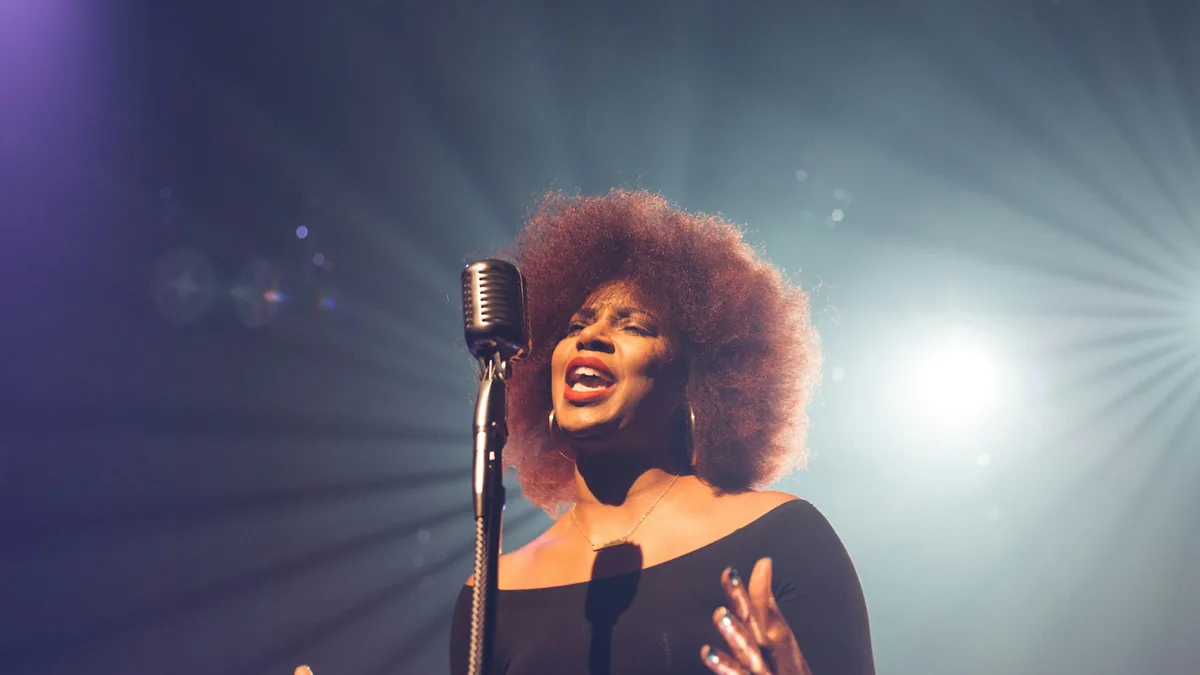
Parveen chose live performance first, before putting out her own songs, and she was upfront about what that choice costs (Real with Ritesh, November 2026). She performed free shows. She approached organisers who stopped answering calls. And she ran into the challenge of being judged by released songs rather than by her voice.
That last point is the crux. An organiser or a fan can't hear your voice in a spreadsheet. A released song is the easy proof, so artists without one get asked, "Where can I listen to you?" Parveen's bet was that a voice heard live is harder to argue with than a track anyone can polish. It's slower. It's also hers.
The stage is a real market. The Canadian Live Music Association's Hear and Now report estimates the sector adds about $10.92 billion a year to GDP, combining live music operations and tourism spending (Canadian Live Music Association, "Hear and Now," January 30, 2025). Live music operations alone account for 27,490 of those jobs.
There's also an audience built for her language. Statistics Canada reported that Punjabi was one of the two languages other than English and French spoken predominantly at home by the largest number of Canadians in 2021, at about 520,000 speakers (Statistics Canada, August 17, 2022). Those are people who may want a voice that sings in their language.
What about the free shows? Parveen described them as part of earning opportunity before she had songs out. I'd call that a strategic trade, as long as you know what you're buying: stage time, feedback, and a reputation for showing up. Free only makes sense when it buys something you can name.
Does a Song Release Still Matter for Reach?
It does, and Parveen isn't dismissing it. She's lining up songs and planning her next steps, but she wanted the order to be live first, so people meet her voice before her catalogue (Real with Ritesh, November 2026). Recorded music is still where reach compounds, and the numbers show how far it travels.
Spotify's 2026 Canada report found that royalties generated by Canadian artists on the platform reached over $544 million CAD in 2025, a 19% jump in a year, and 92% of those royalties came from listeners outside Canada (Spotify, "Loud & Clear," March 24, 2026). More than 370 Canadian artists each generated over $100,000 CAD on Spotify alone.
Here's my read, and it's an interpretation, not a statistic: a recorded song can find listeners a venue never will, while a live set builds the trust that makes people care when the song arrives. Parveen's sequence, voice first and catalogue second, is a legitimate way to build both. The risk is that it takes patience, and she's honest about that.
What Did the Studio and the Stage Teach Her?
Parveen described her first time in a recording studio as emotional, and she also pulled back the curtain on the less visible side of a music life, the truth behind the stage (Real with Ritesh, November 2026). The episode isn't a highlight reel. It's a look at the choices underneath one, with Parveen singing live along the way, which brought the conversation back to what matters most to her.

When I asked how she wants people to know her, her answer was simple: "Meri awaaz se." Through my voice. Not through followers, not through a viral clip, not through a title someone gives her. For a creative person in a world that measures everything, I found that clarity refreshing.
It connects to something I keep telling founders. Your name is what people say about you when you're not in the room. Parveen's answer is her version of building that on purpose. I covered the business side of this in Personal Brand Is the Ultimate Trust Layer in AI Markets, and Nic Nguyen's consistency-first approach in The Hook Formula 100+ Brands Pay For.
Work With Ritesh
Balancing a Day Job With a Bigger Ambition?
Whether it's music, a business, or a craft you want to take seriously, the hard part is the same: deciding what to commit to and what to test first. If you want a clear second opinion on your next step, let's talk it through.
Book a Strategy Call →This episode shares personal experiences and perspectives for educational and informational purposes. References to Master Salim Ji reflect Parveen Khan's account of her relationship and experiences with him; he does not appear as a guest in this episode. Career decisions depend on individual circumstances and financial considerations. All third-party music, lyrics, names, and trademarks remain the property of their respective rights holders.
Frequently Asked Questions
What did Master Salim Ji tell Parveen Khan about her voice?
Parveen Khan recalls her ustad, Master Salim Ji, telling her "Tu ek din star banegi," meaning you will be a star one day. She says he treats her like a daughter. She also stresses that believing in her voice and taking the next step were decisions she still had to make herself (Real with Ritesh, November 2026).
Why did Parveen Khan leave her job to pursue music?
She left because she could no longer give music the time it needed. She describes taking the risk without having every answer and working through self-doubt about whether she could make it. Career decisions depend on individual circumstances and finances, so her path is one story, not a rule (Real with Ritesh, November 2026).
Why did Parveen Khan start with live performances instead of releasing songs?
She chose to build through live shows first, including free performances, so people would know her for her voice rather than only for released songs. She acknowledges the trade-off: organisers can stop answering calls, and artists without released music are often judged on that gap (Real with Ritesh, November 2026).
How big is the live music industry in Canada?
The Canadian Live Music Association estimates live music contributes about $10.92 billion a year to Canada's GDP, combining live music operations and tourism spending, and supports roughly 101,604 jobs. Live music operations alone account for 27,490 of those jobs (Hear and Now report, January 2025).
Do Canadian artists earn much from streaming?
Spotify reported that Canadian artists generated over $544 million CAD in royalties on the platform in 2025, up 19%. More than 370 artists earned over $100,000 CAD each, and 92% of royalties came from listeners outside Canada. These are Spotify's own figures, and most artists earn far less (Spotify, March 2026).
Master Salim Ji told Parveen Khan she'd be a star one day. What turned those words into a career was everything she did afterward: believing in her voice, giving music the time it needed, and taking the next step without every answer.
If you're holding your own version of that sentence from someone who believes in you, ask what the next step is this week. If you'd like help working it out, contact me and we'll map it together. And watch the full episode above to hear Parveen sing.
Sources
- Real with Ritesh, What Master Saleem Told Parveen Khan About Her Voice | Real With Ritesh (source episode for this article), retrieved 2026-11-04, November 3, 2026
- Canadian Live Music Association via SOCAN Magazine, Canadian Live Music Association says the industry contributes $10.92 billion annually to Canada's GDP (Hear and Now report; 101,604 jobs; 27,490 jobs from live music operations), retrieved 2026-11-04, January 30, 2025
- Spotify, Loud & Clear Canada 2026 ($544M+ CAD royalties in 2025, +19%; 370+ artists above $100K CAD; 92% from outside Canada), retrieved 2026-11-04, March 24, 2026
- Statistics Canada, More than half a million people speak predominantly Mandarin or Punjabi at home in Canada (about 520,000 Punjabi speakers, 2021 Census), retrieved 2026-11-04, August 17, 2022
- Photos via Unsplash: Josh Rocklage (cover), Elizeu Dias (live singer), Jacob Hodgson (studio microphone), used under the Unsplash License