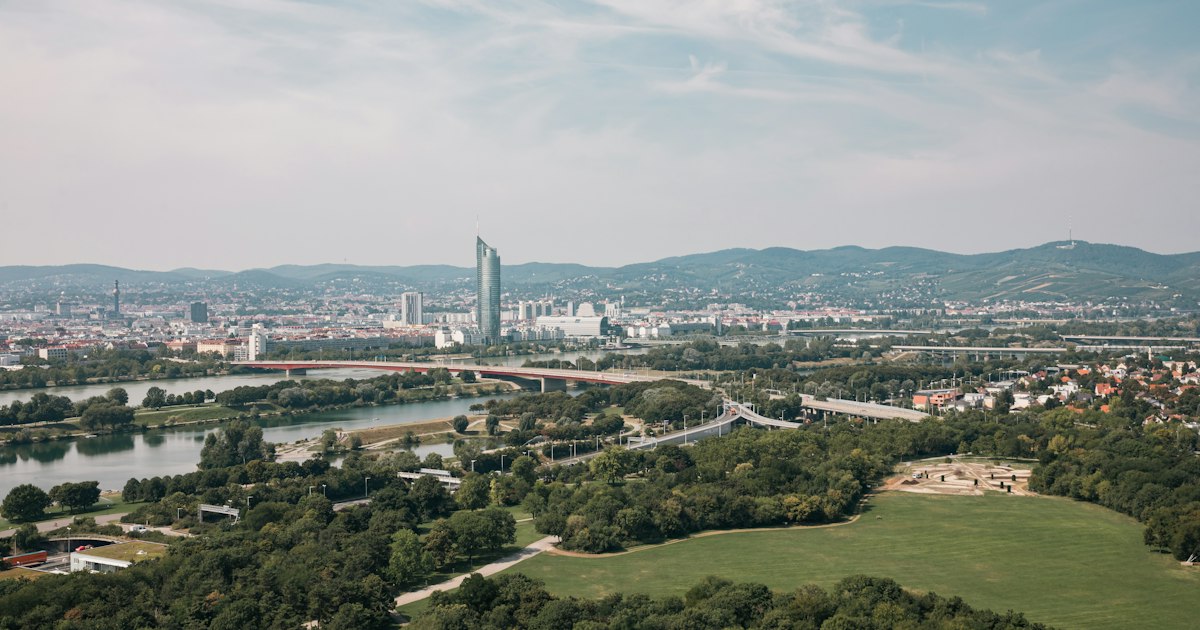
Why would a country spend years courting a company it will never own? I put that question to Matthäus Schweisgut, Director Americas at ABA, INVEST in AUSTRIA, on Real with Ritesh. Behind every investment headline sits a decision about jobs, research, talent, and where a business builds its next ten years. Austria is a useful case study, but the lesson travels: an attractive incentive isn't the same as a sound business decision. Matthäus represents the agency, so I've checked his claims against outside sources, and I've marked where the evidence is thinner.
- International companies are about 2% of Austrian firms but roughly 20% of jobs and 50% of R&D spending, which is why countries compete for them (ABA; TBDC)
- Matthäus's advice: decide on market fit, talent, and long-term strategy first, then treat grants as support, not the reason to move
- Predictability is part of the product a country sells, and UNCTAD's 2026 report flags geopolitics as a top risk to investment
- Austria's AI infrastructure is real but partly still arriving, with its dedicated supercomputer expected around end-2027
Why Do Countries Compete to Attract Companies?
Because a small group of international firms can carry a big share of an economy's output. In the episode, Matthäus said companies with an international background are only about 2% of Austrian firms, yet they provide roughly 20% of jobs and about 50% of research and development spending. TBDC repeats the 2% and 50% figures in its August 2026 guide for Canadian startups (TBDC, 2026). The 20% jobs figure comes from the conversation alone, so treat it as the guest's number.
The global picture explains the urgency. In 2026, UNCTAD reported that worldwide foreign direct investment rose 6% to about $1.6 trillion in 2025, but the top 20 host economies took more than 80% of it, and strategic sectors such as AI infrastructure and semiconductors made up 44% of greenfield project value, up from 16% in 2020 (IISD summary of UNCTAD's World Investment Report 2026, September 9, 2026). Capital is concentrating. A mid-sized country that wants a share has to make a deliberate pitch.
That's the part most people miss. Investment promotion isn't charity or advertising. It's a country asking, "What would make a company's finance team, its engineers, and its founder all say yes?" Once you see it that way, you can run the same test on any location you're considering, including your own city.
What Should Matter More Than Grants?
Market fit, talent, and long-term strategy, in that order of seriousness. Matthäus was direct on this: funding is valuable, but it shouldn't drive the decision alone. Austria's incentives are real. The research premium is 14% of eligible R&D spending done in Austria, and it's refundable, so it can be paid out even without a profit (PwC Tax Summaries, Austria, reviewed July 2026). TBDC adds that direct grants can cover 30% to 80% of eligible costs.
Then read the fine print, which is where a pitch and a decision part ways. PwC notes that in-house R&D needs an expert opinion from the FFG, and that the research premium rules were substantially revised in December 2025 and April 2026. Grant applications can be filed before your Austrian entity exists, but TBDC says money is only paid out once it does. An incentive you can't yet claim isn't a reason to move.
What would I weigh first? The same list I'd give a founder picking any market: Are there customers there who'll pay? Can I hire the people I need? Are the rules stable enough to plan five years out? What does it really cost to operate? Is there help when something breaks? Grants belong on that list, but near the bottom. If the plan only works with the subsidy, the plan is the problem.
Why Does Predictability Matter So Much Right Now?
Because long-term investment is a bet on rules staying put. Matthäus argued that geopolitical uncertainty is pushing companies to look again at where they build, and that Austria and Europe offer a credible, predictable alternative to more volatile markets. UNCTAD's 2026 report backs the underlying worry: it flags trade-policy uncertainty and geopolitical tension as significant downside risks, and counts a record 229 investment policy measures adopted by countries in 2025, many aimed at strategic industries or economic security (IISD, 2026).
That cuts both ways, and it's worth saying plainly. A record number of policy changes means rules are moving everywhere, including in Europe. "Predictable" is a claim a country has to keep earning. It's also a sales line from an agency whose job is to attract you. The way I'd test it: ask what changed in the last 24 months, how often, and who's accountable when it does.
Here's why this matters in Canada. Our own government is making the same kind of pitch to investors with tax design, which I covered in Canada's Productivity Mega Deduction. Countries are competing on rules and certainty as much as on rates.
Is Austria's AI and Technology Pitch Real Today?
Partly real, partly still arriving. Matthäus pointed to AI, quantum, and life sciences as priorities, alongside shared workspaces and access to computing resources for startups. ABA's own site frames its pitch around six industries, including deep tech (AI, cybersecurity, quantum) and life sciences (Invest in Austria, 2026). The nine-sector strategy he described is the government's broader plan.
On AI specifically, the centrepiece is AI Factory Austria (AI:AT), part of the EU's EuroHPC network. One Austrian report puts its budget at €80 million, split between the EU and Austria. As of March 2026, its Vienna hub housed 67 coworkers from 28 companies. But the AI-optimised supercomputer isn't live yet: a July 2026 Invest in Austria post gives the end of 2027, and says current compute is provided in part by the Leonardo system in Bologna (Invest in Austria, 2026).
I'd read that as a roadmap with a hub already open, not a finished facility. If compute access is central to your plan, ask exactly when you'd get it, on what terms, and what you'd use in the meantime. The honest answer to "is it ready?" may be "the community is, the hardware is next."
What Should Canadian Companies Consider Before Expanding to Europe?
Start with proof you're ready, not with a country. Matthäus said ABA looks for companies that already have traction and the capacity to manage an expansion, and that entry often starts with a local partnership before a full team and office. An Austrian entity gives access to all 27 EU member states, and the DACH region of Germany, Austria and Switzerland is about 100 million German-speaking consumers (TBDC, 2026). TBDC puts a typical GmbH at €10,000 minimum capital, half paid in at formation, taking three to four weeks.

Language is the quiet complication. In B2B and technology, English often carries the conversation. Consumer products usually need localization, and an Austrian team that speaks several Central and Eastern European languages can widen your reach. None of that replaces demand. I'd run a readiness check like this:
- Do customers there already want this? Local revenue or signed pilots beat a market-size slide.
- Who runs it? Name the person with the time and authority, not "the team."
- Can you start through a partner? A phased entry limits the cost of being wrong.
- What's the support, and what does it cost? ABA's services are free, per TBDC, but ask what's free versus paid later.
- Does the plan survive without a grant? If not, go back to step one.
I host this show from Calgary, and I keep returning to the same idea: the strongest cross-border moves start with a specific customer problem, not a location. If you're weighing Canada's own pull on talent and companies, Jennifer Lussier on Calgary's 2030 bet covers the home-market side of the same story.
Why Does Any of This Matter If You Don't Own a Business?
Because where companies build decides where jobs, research, and careers appear. If 2% of firms supply about half of R&D spending, one location decision by a handful of them can change a region's opportunities. That's true for the engineer choosing a city, the graduate choosing an industry, and the newcomer choosing a country. Matthäus also made a point I liked: quality of life isn't a perk, it's a retention strategy, especially for small teams relocating. Vienna's safety, courts, and culture are part of that offer.
So the next time you read an investment headline, ask three things. What does the country want? What does the company need? What would have to stay true for ten years? And what would matter most to you when choosing where to build: customers, talent, predictable rules, costs, or government support? I'd genuinely like to hear your answer in the comments on the video.
Have Real Experience Worth Sharing?
If you're a builder, leader, thinker, or expert with practical lessons that can help people make better decisions about business, borders, and growth, I'd like to hear from you. Apply and let's see if it's a fit for the show.
Apply to Be a Guest →Thinking about expanding across borders? Work with Ritesh →
Frequently Asked Questions
Why do countries compete to attract foreign companies?
Because a small number of international firms can carry an outsized share of jobs, research and capital. In Austria, companies with an international background are about 2% of firms but roughly 20% of jobs and 50% of R&D spending, according to ABA and TBDC. Investment also brings talent, supply chains and tax revenue.
Should government grants decide where I expand my business?
No. Funding can improve the economics of a sound decision, but it cannot fix a weak one. Matthäus Schweisgut's advice in the episode is to decide on market fit, talent, and long-term strategy first, then treat grants and tax credits as support rather than the reason to move.
What is Austria's R&D tax credit?
Austria's research premium is 14% of eligible R&D spending performed in Austria, and it is refundable, so it can be paid out even without a profit. In-house R&D needs an FFG expert opinion, and PwC notes the rules were revised in December 2025 and April 2026. Check current rules with an Austrian adviser.
What should a Canadian company consider before expanding to Europe?
Start with proof of demand: local-market revenue or committed customers, a team that can manage the expansion, and a phased plan that often begins with a local partner before an office or hires. An Austrian entity gives access to all 27 EU member states, but language and regulation still vary by market.
Does Austria's AI infrastructure exist today?
Partly. AI Factory Austria (AI:AT) runs a physical hub in Vienna and, as of March 2026, hosted 67 coworkers from 28 companies. Its dedicated AI supercomputer is expected to go live around the end of 2027, and until then compute comes from existing EuroHPC systems such as Leonardo in Bologna.
The lesson from Austria isn't "move to Austria." It's that every country is making a pitch, and your job is to separate the pitch from the decision. Check the customers, the talent, the rules, and the real cost first. Let incentives improve a good plan, never rescue a weak one.
Watch the full conversation on Real with Ritesh on YouTube, connect with Matthäus on LinkedIn, explore ABA, INVEST in AUSTRIA, and get new frameworks early through the newsletter. If you have real experience and practical lessons that could help others make better decisions, apply to be a guest on Real with Ritesh.
This is an unpaid editorial conversation, not a sponsored placement. Matthäus represents ABA, INVEST in AUSTRIA, and his institutional perspective is part of the discussion. This article is for educational and informational purposes only and does not constitute investment, legal, financial, tax, or immigration advice. Statements, figures, and programme details reflect the information discussed at the time of recording or published at the time of writing; funding availability, eligibility, and policies may change. Verify current information with the relevant authorities and qualified advisers before making decisions. Guest views are their own. References to third-party organizations do not imply endorsement, affiliation, or sponsorship.
Sources
- TBDC, Why Growth-Stage Canadian Startups Are Choosing Austria as Their EU Launchpad, retrieved 2026-10-21, August 6, 2026
- IISD, World Investment Report 2026: FDI Recovers to USD 1.6 Trillion but Concentration Deepens (summarizing UNCTAD), retrieved 2026-10-21 (via search summary), September 9, 2026
- PwC Tax Summaries, Austria: Tax credits and incentives, retrieved 2026-10-21 (via search summary), reviewed July 23, 2026
- Invest in Austria, AI Factory Austria (AI:AT) strengthens Austria's AI ecosystem, retrieved 2026-10-21 (via search summary), July 2026
- ABA, INVEST in AUSTRIA, retrieved 2026-10-21, 2026
- Real with Ritesh, How Countries Attract Companies and Why It Matters to You (Matthäus Schweisgut), YouTube, October 20, 2026